
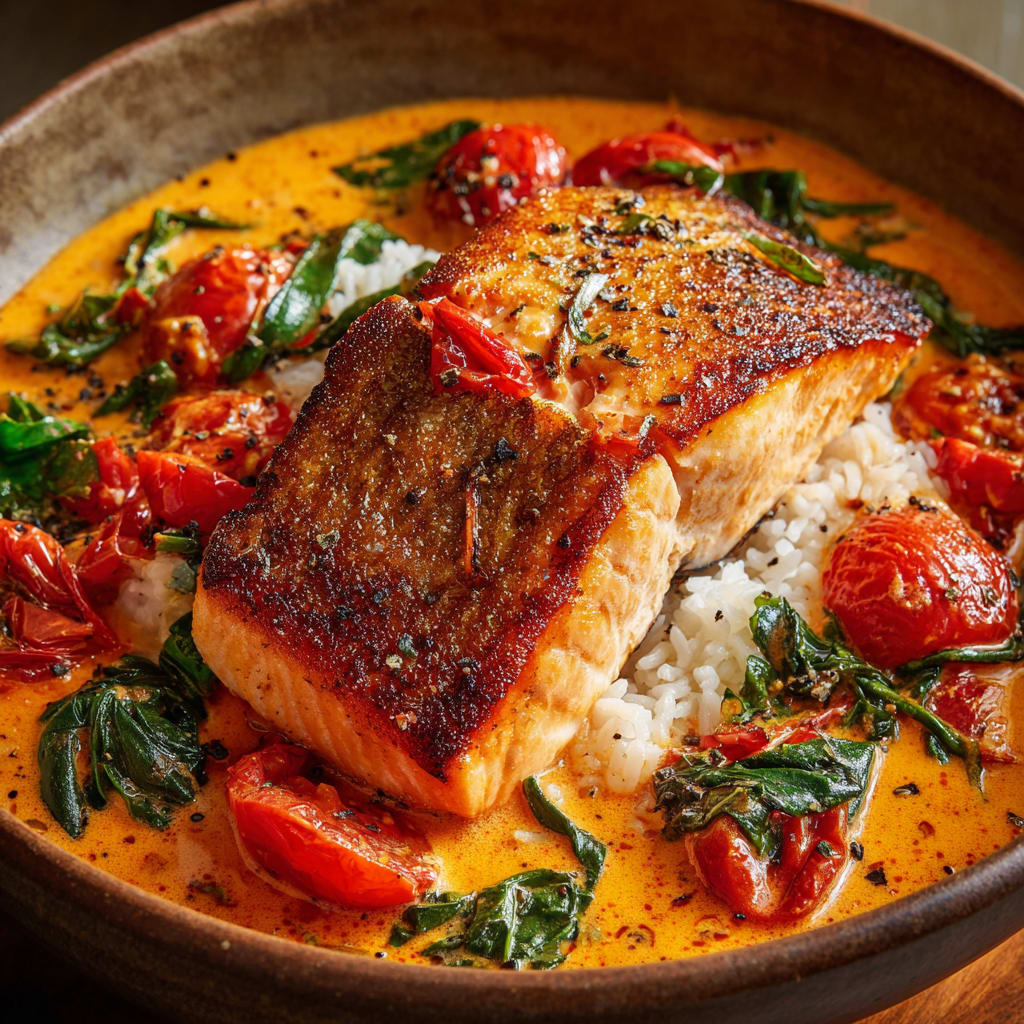
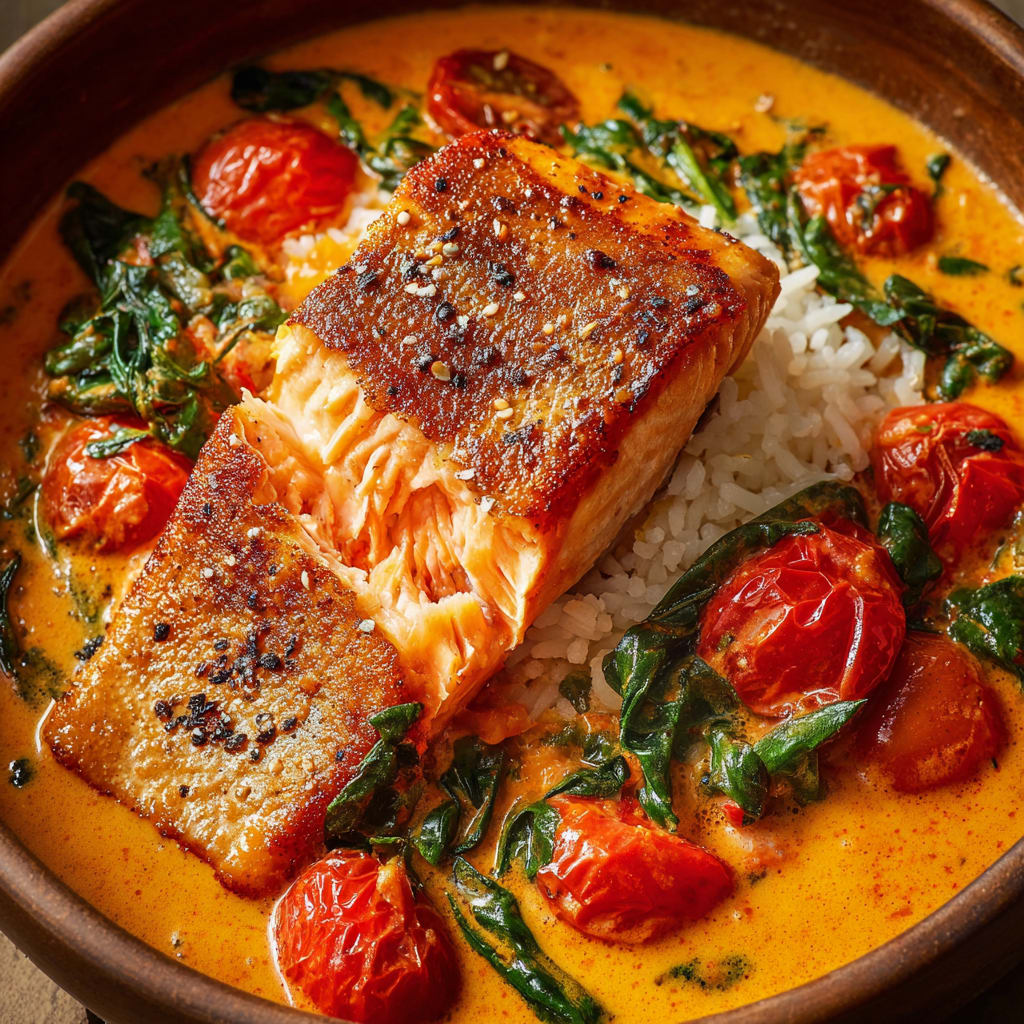
Picture this: a perfectly crispy salmon fillet with golden edges, resting on a vibrant bed of velvety roasted red pepper sauce. The rich flavor of the salmon contrasts beautifully with the sweet, smoky notes of the sauce, creating a restaurant-quality dish right in your home kitchen. This Crispy Salmon with Roasted Red Pepper Sauce is a show-stopping meal that looks fancy but requires minimal effort. You’ll learn how to achieve that coveted crispy exterior while keeping the fish tender and moist, plus how to create a luscious sauce that elevates the entire dish to new heights.
Why You’ll Love This Recipe
This Crispy Salmon with Roasted Red Pepper Sauce is about to become your new favorite dinner option for several compelling reasons. First, the textural contrast is simply divine—the satisfying crunch of the perfectly seared salmon skin against the buttery tenderness of the fish itself creates a sensory experience that’s hard to beat.
The roasted red pepper sauce adds a luxurious element that transforms this from just another salmon dinner into something truly special. Sweet, smoky, and with a hint of garlic, it complements the rich salmon perfectly while adding a gorgeous pop of color to your plate.
What’s more, despite its impressive presentation, this recipe is surprisingly straightforward. The sauce can be prepared ahead of time, and the salmon cooks in just minutes. It’s the perfect balance of sophisticated flavor and weeknight convenience. Whether you’re cooking for a special occasion or simply treating yourself to an elevated dinner, this salmon with red pepper sauce delivers restaurant-quality results with home kitchen simplicity.
Ingredients List for the Crispy Salmon with Roasted Red Pepper Sauce
These carefully selected ingredients create the perfect balance of flavors and textures, with the rich salmon complemented by the sweet, smoky roasted red pepper sauce.
For the Salmon:
- 2 lbs salmon (cut into individual portions)
- 2 Tbsp avocado oil
- 1/2 tsp sea salt (to taste)
- 1 tsp garlic powder
- ½ tsp paprika
For the Roasted Red Pepper Sauce:
- 1 Tbsp avocado oil
- 1 cup yellow onion (chopped)
- 5 large cloves garlic (minced)
- 1 (16-oz) jar roasted red peppers (drained)
- 1 (15-oz) can full-fat coconut milk
- 1 tsp sea salt (to taste)
- 1 cup cherry tomatoes (optional)
- 5 ounces baby spinach (optional)
Pro Tips
Getting the perfect crispy salmon with a silky-smooth roasted red pepper sauce requires attention to a few critical details:
Master the Temperature: The secret to achieving that restaurant-quality crispy exterior is cooking the salmon at the right temperature. Your pan should be properly preheated—when you add a drop of water, it should sizzle and evaporate immediately. This ensures the salmon sears rather than steams, creating that coveted crisp texture.
Don’t Rush the Sauce: Allow your onions and garlic to properly caramelize before adding the roasted red peppers. This slow cooking process develops a depth of flavor that makes the sauce truly exceptional. Taking an extra 2-3 minutes for this step makes all the difference in the final taste profile.
Respect the Rest: After cooking your Crispy Salmon with Roasted Red Pepper Sauce, let the fish rest for at least 10 minutes before serving. This crucial step allows the juices to redistribute throughout the fillet, ensuring each bite is perfectly moist and flavorful. Skipping this rest period can result in juices running out and leaving your beautifully cooked salmon dry.
Instructions
Step 1: Prepare the Roasted Red Pepper Sauce
Heat the tablespoon of avocado oil in a large skillet over medium heat. Add the chopped yellow onion and cook for 5-7 minutes until it becomes translucent and begins to caramelize.
Step 2: Add Aromatics
Add the minced garlic to the skillet and sauté for 1-2 minutes until fragrant, being careful not to let it burn.
Step 3: Blend the Sauce Base
Transfer the sautéed onion and garlic to a blender. Add the drained roasted red peppers and blend until smooth.
Step 4: Finish the Sauce
Return the blended mixture to the skillet. Pour in the coconut milk and stir to combine. Add sea salt to taste. Bring to a gentle simmer and let cook for 5-10 minutes until slightly thickened.
Step 5: Add Optional Vegetables
If using, add the cherry tomatoes and cook until they begin to burst, about 3-4 minutes. Stir in the baby spinach and cook just until wilted, about 1-2 minutes.
Step 6: Prepare the Salmon
While the sauce simmers, pat the salmon portions dry with paper towels. Season both sides with sea salt, garlic powder, and paprika.
Step 7: Cook the Salmon
Heat two tablespoons of avocado oil (or high-temperature cooking oil of choice) in a large skillet (I use the same skillet I used to sauté the onion and garlic) over medium-high heat.
Step 8: Heat the Skillet
Allow the skillet to heat up for a few minutes until it is sizzling hot. Aim for 400 to 500 degrees Fahrenheit.
Step 9: Sear the First Side
Carefully place the salmon filets skin side up (flesh-side down) on the hot skillet. Be careful to gently place the filets on the skillet rather than plunking them down, or hot oil will surely splash back at you. If you have a mesh cover to avoid grease splatter, feel free to use it here.
Step 10: Flip and Finish
Cook salmon for 6 minutes on the flesh side. Use a sturdy spatula (I use a metal spatula) to carefully flip the salmon and cook for 4 minutes on the salmon skin side, or cook to your desired level of doneness.
Step 11: Flipping Technique
Pro tip for flipping salmon: You can use the spatula to gently roll the salmon to the other side rather than picking it up all the way and plopping it down. This, again, avoids grease splatter.
Step 12: Check Doneness
Salmon is considered fully cooked once it reaches an internal temperature of 145 degrees F. Many people, however, prefer the texture of salmon when it reaches 125 degrees F. Choose your level of doneness accordingly, but note that salmon will have a softer, juicier texture when cooked slightly below 145.
Step 13: Verify Temperature
To check the internal temperature of the fish, insert a meat thermometer into the thickest part of the filet.
Step 14: Rest the Salmon
Transfer the pan-seared salmon to a plate and allow it to rest for 10 minutes while you finish making the sauce.
Step 15: Serve
Place a generous portion of the roasted red pepper sauce on each plate. Top with a piece of the crispy salmon and serve immediately.
Variations
Herb-Crusted Crispy Salmon: Before cooking your Crispy Salmon with Roasted Red Pepper Sauce, press a mixture of fresh herbs (dill, parsley, and chives work beautifully) combined with a bit of lemon zest onto the flesh side of the salmon. This creates an aromatic crust that adds another dimension of flavor while still pairing perfectly with the roasted red pepper sauce.
Mediterranean Style: Transform this dish by adding Mediterranean flavors to the sauce. Incorporate a handful of pitted Kalamata olives, 2 tablespoons of capers, and a sprinkle of dried oregano to the roasted red pepper sauce during the simmering stage. Finish with crumbled feta cheese on top just before serving for a Greek-inspired variation that’s bursting with bold flavors.
Dairy-Free Alternative: While the original recipe uses coconut milk for creaminess, you can substitute it with cashew cream for those who don’t care for coconut flavor. Soak 1 cup of raw cashews in hot water for at least 1 hour, then drain and blend with 1 cup of fresh water until completely smooth. Use this in place of the coconut milk for a neutral creamy base that lets the roasted red pepper flavor shine.
Storage/Serving
Storage Instructions: Once cooled, store leftover Crispy Salmon with Roasted Red Pepper Sauce in separate airtight containers in the refrigerator. The salmon will keep for up to 2 days, while the sauce can be stored for up to 5 days. For best results, reheat the salmon gently in a 275°F oven until just warmed through (about 10-15 minutes) to prevent it from drying out. The sauce can be reheated in a saucepan over medium-low heat, stirring occasionally.
Serving Suggestions: This versatile dish pairs beautifully with several sides. For a complete meal, serve it over a bed of garlic-infused cauliflower rice or alongside roasted asparagus drizzled with lemon juice. For a more substantial dinner, consider serving with creamy polenta or a simple risotto that can soak up the delicious roasted red pepper sauce. A side of lightly dressed arugula salad with shaved Parmesan adds a peppery contrast that complements the sweet notes in the sauce perfectly.
FAQs
Can I use frozen salmon for this recipe?
Yes, you can use frozen salmon, but for best results, thaw it completely in the refrigerator overnight and pat it very dry before cooking. Excess moisture will prevent proper crisping of the skin and flesh.
What can I substitute for avocado oil?
Avocado oil is ideal because of its high smoke point, but you can substitute grapeseed oil or refined olive oil (not extra virgin) as they also withstand high heat cooking required for crispy salmon with roasted red pepper sauce.
Can I make the sauce ahead of time?
Absolutely! The roasted red pepper sauce can be made up to 3 days ahead and stored in an airtight container in the refrigerator. This makes weeknight preparation much faster.
What’s the best way to tell if salmon is cooked properly without a thermometer?
The salmon should flake easily with a fork when it’s done. You can also look at the color—properly cooked salmon will change from translucent to opaque and will have just a hint of translucency in the center for optimal moisture.
Is this recipe suitable for meal prep?
While the sauce is excellent for meal prep, the salmon is best enjoyed fresh to maintain its crispy texture. If you must prep ahead, slightly undercook the salmon, then reheat it in a hot oven just before serving to revive some of the crispiness.
Crispy Salmon with Roasted Red Pepper Sauce
- Prep Time: 15 mins
- Cook Time: 30 mins
- Total Time: 45 mins
- Yield: 4 people 1x
- Category: Dinner
- Method: Cooking
- Cuisine: American
Description
Indulge in the irresistible flavors of Crispy Salmon with Roasted Red Pepper Sauce. Discover a delicious new way to enjoy your favorite fish dish!
Ingredients
- 2 lbs salmon (cut into individual portions)
- 2 Tbsp avocado oil
- 1/2 tsp sea salt (to taste)
- 1 tsp garlic powder
- ½ tsp paprika
- 1 Tbsp avocado oil
- 1 cup yellow onion (chopped)
- 5 large cloves garlic (minced)
- 1 (16-oz) jar roasted red peppers (drained)
- 1 (15-oz) can full-fat coconut milk
- 1 tsp sea salt (to taste)
- 1 cup cherry tomatoes (optional)
- 5 ounces baby spinach (optional)
Instructions
- Step 1– Cook the Salmon: Heat two tablespoons of avocado oil (or high-temperature cooking oil of choice) in a large skillet (I use the same skillet I used to sauté the onion and garlic) over medium-high heat.
- Step 2– Allow the skillet to heat up for a few minutes until it is sizzling hot. Aim for 400 to 500 degrees Fahrenheit.
- Step 3- Carefully place the salmon filets skin side up (flesh-side down) on the hot skillet. Be careful to gently place the filets on the skillet rather than plunking them down, or hot oil will surely splash back at you. If you have a mesh cover to avoid grease splatter, feel free to use it here.
- Step 4- Cook salmon for 6 minutes on the flesh side. Use a sturdy spatula (I use a metal spatula) to carefully flip the salmon and cook for 4 minutes on the salmon skin side, or cook to your desired level of doneness.
- Step 5– Pro tip for flipping salmon: You can use the spatula to gently roll the salmon to the other side rather than picking it up all the way and plopping it down. This, again, avoids grease splatter.
- Step 6– Salmon is considered fully cooked once it reaches an internal temperature of 145 degrees F. Many people, however, prefer the texture of salmon when it reaches 125 degrees F. Choose your level of doneness accordingly, but note that salmon will have a softer, juicier texture when cooked slightly below 145: 7- To check the internal temperature of the fish, insert a meat thermometer into the thickest part of the filet.
- Step 7- Transfer the pan-seared salmon to a plate and allow it to rest for 10 minutes while you finish making the sauce.
Notes
Try This Recipe and Leave a comment Below, your opinion matters to me!
Nutrition
- Serving Size: 4 serving
- Calories: 400
- Sugar: 5g
- Sodium: 400mg
- Fat: 10g
- Saturated Fat: 3g
- Unsaturated Fat: 7g
- Trans Fat: 0g
- Carbohydrates: 40g
- Fiber: 5g
- Protein: 15g
- Cholesterol: 50mg