
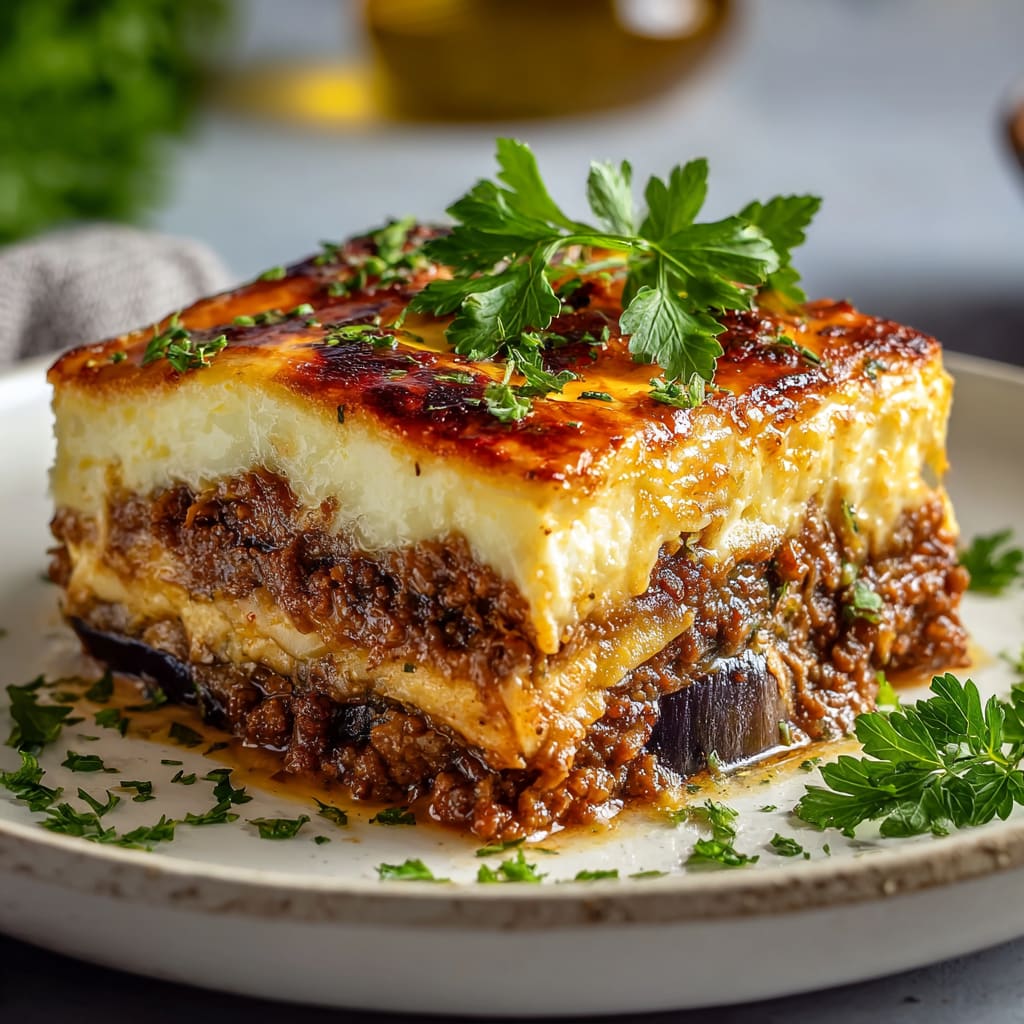
The rich, aromatic layers of Greek Moussaka welcome you with an irresistible combination of spiced meat, creamy béchamel, and perfectly tender eggplant. This Mediterranean masterpiece transforms humble ingredients into a culinary symphony that has delighted families for generations. Greek Moussaka stands apart from ordinary casseroles with its distinctive layering technique and unforgettable flavor profile that balances savory, sweet, and creamy elements. You’ll learn not just how to create this iconic dish, but how to elevate it to restaurant quality with authentic techniques and flavor-boosting secrets.
Why You’ll Love This Recipe
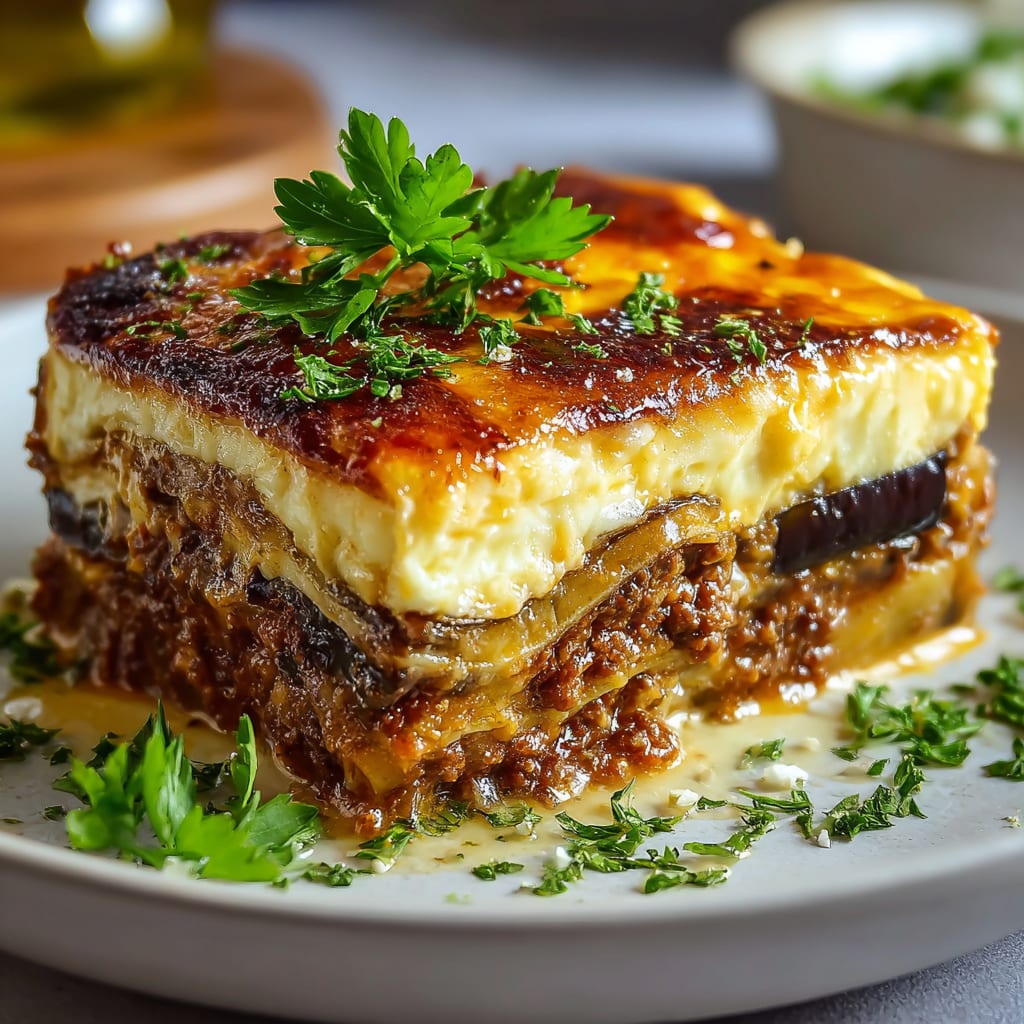
This Greek Moussaka recipe delivers an exceptional dining experience that will transport you straight to a seaside taverna in Santorini. The contrast between the silky, nutmeg-infused béchamel topping and the robust meat filling creates an extraordinary textural experience – creamy meeting savory in perfect harmony. Each forkful reveals layers of complexity: the subtle sweetness of cinnamon-kissed meat sauce, the earthiness of roasted eggplant, and the velvety richness of the golden-baked topping.
What makes this Greek Moussaka truly special is its impressive presentation combined with straightforward preparation. Though it looks like something that requires professional culinary training, this recipe breaks down the process into manageable steps anyone can master. The dish also improves with time, making it perfect for meal prep or entertaining – prepare it a day ahead and enjoy even more developed flavors when served.
Best of all, this classic Greek casserole delivers incredible depth of flavor without requiring exotic ingredients. Everything you need is readily available at standard grocery stores, making this impressive dish accessible for any home cook looking to expand their culinary repertoire.
Ingredients
For the Eggplant Layer:
- 3 large eggplants (approximately 3 pounds/1.4kg)
- ¼ cup (60ml) olive oil
- Salt and freshly ground black pepper to taste
For the Meat Sauce:
- 2 tablespoons (30ml) olive oil
- 1 large onion, finely diced (about 1½ cups/240g)
- 4 garlic cloves, minced
- 2 pounds (900g) ground lamb (or substitute beef)
- 1 can (6oz/170g) tomato paste
- 1 can (14.5oz/411g) diced tomatoes
- ½ cup (120ml) dry red wine
- 2 teaspoons dried oregano
- 1 teaspoon ground cinnamon
- ½ teaspoon ground allspice
- 1 bay leaf
- 2 tablespoons fresh parsley, chopped
For the Béchamel Sauce:
- ½ cup (113g) unsalted butter
- ⅔ cup (85g) all-purpose flour
- 4 cups (950ml) whole milk, warmed
- ¼ teaspoon freshly grated nutmeg
- 3 large eggs, beaten
- 1 cup (100g) Parmesan cheese, grated
The star ingredients in authentic Greek Moussaka are eggplant and lamb – eggplant provides a tender, meaty base while lamb delivers the rich, distinctive flavor that makes traditional moussaka so memorable. The cinnamon and allspice might seem unusual in a savory dish, but they’re signature spices that give this classic Greek casserole its distinctive flavor profile.
Pro Tips
Master the Eggplant Preparation
The key to perfect Greek Moussaka lies in properly preparing the eggplant. Skip the traditional salting and draining process by instead roasting the eggplant slices until golden brown. This not only saves time but actually develops a deeper flavor through caramelization. Arrange your eggplant in a single layer on baking sheets and brush with olive oil – overcrowding will cause them to steam rather than roast. Look for a rich golden color that indicates the bitter compounds have been transformed into sweet, complex flavors.
Perfect the Béchamel Consistency
For a luxuriously silky béchamel sauce, warm your milk before adding it to the roux. Cold milk creates lumps that are difficult to remedy. Add the milk gradually while whisking constantly – patience here pays off with a perfectly smooth sauce. The final béchamel should coat the back of a spoon but still flow gently, similar to a thick pudding. Remember that it will continue to thicken as it cools, so aim for a slightly looser consistency than your final goal.
Develop Complex Flavor in the Meat Sauce
Allow your meat sauce to simmer slowly for at least 30 minutes. This extended cooking time creates depth as the wine reduces and the spices bloom in the mixture. The sauce should thicken considerably – you’re looking for a rich, moist mixture without excess liquid that could make your Greek Moussaka soggy. Taste before assembling and adjust salt, pepper, and cinnamon to achieve the perfect balance of savory and aromatic notes.
Instructions
Step 1: Prepare the Eggplant
Preheat your oven to 425°F (220°C). Trim the ends from the eggplants and slice them lengthwise into ¼-inch (6mm) thick planks. Arrange the slices on baking sheets, brush both sides with olive oil, and season with salt and pepper. Bake for 30 minutes, flipping halfway through, until golden brown and tender. Once done, reduce the oven temperature to 375°F (190°C) for the final baking.
Step 2: Make the Meat Sauce
While the eggplant roasts, heat olive oil in a large skillet over medium heat. Add the onions and cook until translucent, about 5 minutes. Add the garlic and sauté until fragrant, about 30 seconds. Increase heat to medium-high and add the ground lamb, breaking it up with a wooden spoon as it browns. Once the meat is cooked through (about 8-10 minutes), drain excess fat if necessary.
Step 3: Season and Simmer the Sauce
Stir the tomato paste into the meat mixture and cook for 2 minutes, allowing it to caramelize slightly. Add the diced tomatoes, wine, oregano, cinnamon, allspice, and bay leaf. Reduce heat to low and simmer uncovered for 30 minutes, stirring occasionally until most of the liquid has evaporated and the sauce has thickened. Remove the bay leaf, stir in the parsley, and adjust seasoning to taste.
Step 4: Prepare the Béchamel
Melt the butter in a large saucepan over medium heat. Add the flour and whisk continuously for 2 minutes to form a roux. Gradually add the warm milk, whisking constantly to prevent lumps. Continue cooking and whisking until the sauce thickens enough to coat the back of a spoon, about 5-7 minutes. Remove from heat and stir in the nutmeg. Allow to cool slightly, then whisk in the eggs and half of the Parmesan cheese.
Step 5: Assemble and Bake
Lightly oil a 9×13-inch (23×33-cm) baking dish. Arrange half of the eggplant slices on the bottom, overlapping slightly if needed. Spread all the meat sauce evenly over the eggplant, then top with the remaining eggplant slices. Pour the béchamel sauce over everything, ensuring it covers the entire surface. Sprinkle with the remaining Parmesan cheese and bake for 45-50 minutes until the top is golden brown and bubbly. Allow to rest for at least 15 minutes before serving your magnificent Greek Moussaka.
Variations
Vegetarian Moussaka
Create a meatless version of this Greek classic by substituting the lamb with a hearty mixture of lentils and mushrooms. Cook 2 cups of green or brown lentils until tender, then combine with 1 pound of finely chopped mushrooms sautéed with the same aromatics and spices as the original recipe. This plant-based version maintains the protein content and satisfying texture of traditional Greek Moussaka while being suitable for vegetarian diets. The earthy flavor of lentils and mushrooms complements the eggplant beautifully.
Potato Moussaka
For a heartier winter variation, incorporate thinly sliced potatoes along with or instead of some of the eggplant. Parboil 2 pounds of Yukon Gold potatoes sliced ¼-inch thick for 5 minutes, then drain and cool before layering them in your Greek Moussaka. This variation is particularly popular in northern Greece and creates a more substantial dish that can feed a crowd. The potatoes add a comforting element that pairs wonderfully with the rich meat sauce and creamy topping.
Lighter Moussaka
Create a lighter version by using ground turkey or chicken instead of lamb, reducing the béchamel by half, and incorporating more vegetables like zucchini or bell peppers alongside the eggplant. Top with a mixture of Greek yogurt, eggs, and a smaller amount of cheese for a protein-rich topping with less fat than traditional béchamel. This modern spin on Greek Moussaka preserves the essence of the dish while offering a less indulgent option for everyday meals.
Storage and Serving
Greek Moussaka actually improves with time, making it perfect for make-ahead meals. Once cooled completely, cover with plastic wrap or aluminum foil and refrigerate for up to 4 days. For longer storage, freeze individual portions in airtight containers for up to 3 months. Thaw overnight in the refrigerator before reheating. To reheat, cover with foil and warm in a 350°F (175°C) oven for 20-30 minutes until heated through, removing the foil for the last 5 minutes to recrisp the top.
Serve your Greek Moussaka with a simple Greek salad dressed with olive oil and lemon juice – the crisp, acidic vegetables provide the perfect contrast to the rich casserole. For an authentic Greek meal, pair with warm pita bread and tzatziki sauce on the side. A glass of medium-bodied red wine such as Agiorgitiko or Xinomavro beautifully complements the dish’s complex flavors. For a simple weeknight presentation, a side of steamed green vegetables dressed with lemon juice adds freshness and balances the meal.
FAQs
Can I make Greek Moussaka in advance?
Yes, Greek Moussaka actually improves with time! Prepare the entire dish, cool completely, and refrigerate covered for up to 2 days before baking. Alternatively, bake it completely, cool, and refrigerate, then reheat covered at 350°F for about 25 minutes.
Is salting the eggplant necessary?
While traditional recipes call for salting eggplant to remove bitterness, modern cultivated eggplants are typically less bitter. Roasting the eggplant as directed in this recipe eliminates any potential bitterness while developing deeper flavor, making the salting step unnecessary.
Can I substitute the lamb in Greek Moussaka?
Yes, ground beef is the most common substitute for lamb in Greek Moussaka. For the most authentic flavor when using beef, add an extra tablespoon of olive oil to compensate for lamb’s higher fat content. Ground turkey can work too, though the flavor profile will be milder.
Why did my béchamel sauce turn lumpy?
Lumps typically form when cold milk is added too quickly to the hot roux. Prevent this by warming the milk first and adding it gradually while whisking constantly. If lumps do form, strain the sauce through a fine-mesh sieve or blend with an immersion blender.
How do I know when my moussaka is done baking?
Perfectly baked Greek Moussaka should have a golden brown top with slightly bubbling edges. The internal temperature should reach about 160°F (71°C). Allow it to rest for at least 15 minutes after baking – it will continue to set during this time and become easier to slice.

Outrageously Delicious Greek Moussaka
- Prep Time: 40 minutes
- Cook Time: 1 hour
- Total Time: 1 hour 40 minutes
- Yield: 8 servings 1x
- Category: Dinner
- Method: Baking
- Cuisine: Americaine
Description
Outrageously Delicious Greek Moussaka with layers of flavorful eggplant, hearty ground beef, creamy béchamel sauce. Crowd-pleasing comfort food.
Ingredients
- 3 large eggplants
- ¼ cup olive oil
- Salt and freshly ground black pepper to taste
- 2 tablespoons olive oil
- 1 large onion, finely diced
- 4 garlic cloves, minced
- 2 pounds ground lamb (or substitute beef)
- 1 can tomato paste
- 1 can diced tomatoes
- ½ cup dry red wine
- 2 teaspoons dried oregano
- 1 teaspoon ground cinnamon
- ½ teaspoon ground allspice
- 1 bay leaf
- 2 tablespoons fresh parsley, chopped
- ½ cup unsalted butter
- ⅔ cup all-purpose flour
- 4 cups whole milk, warmed
- ¼ teaspoon freshly grated nutmeg
- 3 large eggs, beaten
- 1 cup Parmesan cheese, grated
Instructions
- Step 1: Prepare the Eggplant Preheat your oven to 425°F (220°C). Trim the ends from the eggplants and slice them lengthwise into ¼-inch (6mm) thick planks. Arrange the slices on baking sheets, brush both sides with olive oil, and season with salt and pepper. Bake for 30 minutes, flipping halfway through, until golden brown and tender. Once done, reduce the oven temperature to 375°F (190°C) for the final baking.
- Step 2: Make the Meat Sauce While the eggplant roasts, heat olive oil in a large skillet over medium heat. Add the onions and cook until translucent, about 5 minutes. Add the garlic and sauté until fragrant, about 30 seconds. Increase heat to medium-high and add the ground lamb, breaking it up with a wooden spoon as it browns. Once the meat is cooked through (about 8-10 minutes), drain excess fat if necessary.
- Step 3: Season and Simmer the Sauce Stir the tomato paste into the meat mixture and cook for 2 minutes, allowing it to caramelize slightly. Add the diced tomatoes, wine, oregano, cinnamon, allspice, and bay leaf. Reduce heat to low and simmer uncovered for 30 minutes, stirring occasionally until most of the liquid has evaporated and the sauce has thickened. Remove the bay leaf, stir in the parsley, and adjust seasoning to taste.
- Step 4: Prepare the Béchamel Melt the butter in a large saucepan over medium heat. Add the flour and whisk continuously for 2 minutes to form a roux. Gradually add the warm milk, whisking constantly to prevent lumps. Continue cooking and whisking until the sauce thickens enough to coat the back of a spoon, about 5-7 minutes. Remove from heat and stir in the nutmeg. Allow to cool slightly, then whisk in the eggs and half of the Parmesan cheese.
- Step 5: Assemble and Bake Lightly oil a 9×13-inch (23×33-cm) baking dish. Arrange half of the eggplant slices on the bottom, overlapping slightly if needed. Spread all the meat sauce evenly over the eggplant, then top with the remaining eggplant slices. Pour the béchamel sauce over everything, ensuring it covers the entire surface. Sprinkle with the remaining Parmesan cheese and bake for 45-50 minutes until the top is golden brown and bubbly. Allow to rest for at least 15 minutes before serving your magnificent Greek Moussaka.
Notes
Fresh ingredients will always yield the best flavor results.
Nutrition
- Serving Size: 1 slice
- Calories: 480
- Sugar: 8g
- Sodium: 730mg
- Fat: 29g
- Saturated Fat: 12g
- Unsaturated Fat: 14g
- Trans Fat: 0g
- Carbohydrates: 28g
- Fiber: 7g
- Protein: 26g
- Cholesterol: 155mg