

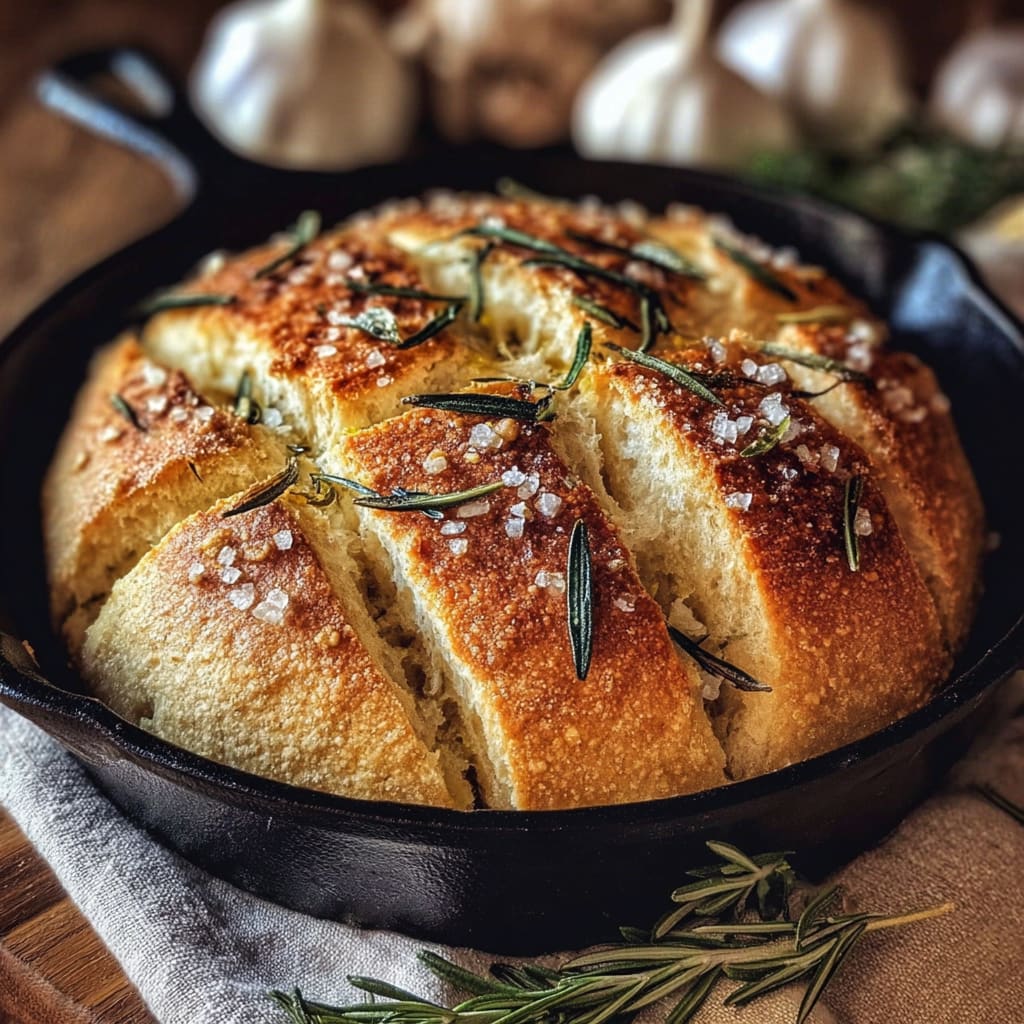
The aroma of Rustic Garlic Rosemary Skillet Bread baking in your kitchen is nothing short of intoxicating – a warm, herbaceous perfume that promises comfort with every slice. This artisanal-style bread achieves the perfect balance of a crackling crust and a tender, airy interior studded with fragrant rosemary and pungent garlic. Unlike fussy bakery breads, this no-knead Rustic Garlic Rosemary Skillet Bread comes together with minimal effort yet delivers maximum flavor, making it the perfect companion for everything from soups to Sunday dinners. You’ll learn how to create bakery-quality bread using a simple cast-iron skillet and basic ingredients that transform into something truly extraordinary.
Why You’ll Love This Recipe
This Rustic Garlic Rosemary Skillet Bread recipe will quickly become your go-to bread for any occasion. The contrast between the crackly, golden exterior and the soft, pillowy interior creates a textural masterpiece that even novice bakers can achieve. What makes this bread special is the marriage of aromatic rosemary and rich garlic that infuses every bite with Mediterranean warmth.
The beauty of skillet bread lies in its forgiving nature – there’s no complex kneading or shaping required, making this an accessible recipe for bakers of all experience levels. The cast iron skillet works magic, creating that professional bakery-style crust that cracks satisfyingly when you tear into it.
This bread comes together with minimal hands-on time, yet tastes like it came from an artisanal bakery. The combination of rustic appearance, incredible aroma, and versatile serving options means this homemade rosemary garlic bread will earn you compliments at any gathering, whether served alongside pasta or presented as an appetizer with dipping oil.
Ingredients
For this irresistible Rustic Garlic Rosemary Skillet Bread, you’ll need:
• 3½ cups (440g) all-purpose flour
• 2¼ teaspoons (7g) instant yeast (one standard packet)
• 1½ teaspoons salt
• 2 tablespoons fresh rosemary, finely chopped (or 2 teaspoons dried)
• 4-6 garlic cloves, minced (about 2 tablespoons)
• 1½ cups (355ml) warm water (about 110°F/43°C)
• 2 tablespoons olive oil, plus extra for drizzling
• 1 tablespoon honey (optional, for subtle sweetness)
• Flaky sea salt for topping
The quality of your rosemary matters significantly in this recipe – fresh rosemary provides the most aromatic punch, but dried works well too. For the garlic, fresh cloves deliver a more pronounced flavor than pre-minced options. The olive oil adds richness, while the optional honey balances the savory elements with just a whisper of sweetness that enhances the bread’s complexity.
Pro Tips
Creating perfect Rustic Garlic Rosemary Skillet Bread requires attention to a few crucial details that transform good bread into great bread:
Temperature matters: The water should feel warm to the touch but not hot – aim for 110°F/43°C. Too hot will kill the yeast; too cool will slow fermentation. If you don’t have a thermometer, the water should feel like warm bath water. This precise temperature activates the yeast properly, ensuring your bread rises beautifully.
Preheat properly: Your skillet must be thoroughly preheated in the oven for at least 20 minutes before adding the dough. This initial heat shock is what creates that bakery-style crust. A cold or insufficiently heated skillet will result in bread with a soft, underwhelming exterior.
Scoring technique: Just before baking, score the top of your dough with a sharp knife or razor blade about ¼-inch deep. This isn’t just decorative – these cuts allow the bread to expand properly during baking without cracking unpredictably. For the most attractive finish, use confident, decisive cuts in a cross pattern or parallel lines.
Instructions
Step 1: Activate the yeast mixture
In a large mixing bowl, combine the warm water (110°F/43°C) with honey and instant yeast. Allow this mixture to sit for about 5 minutes until it becomes foamy and fragrant, indicating the yeast is active. This step ensures your Rustic Garlic Rosemary Skillet Bread will rise properly and develop that beautiful interior structure.
Step 2: Create the dough
Add 2 tablespoons olive oil to the yeast mixture, then mix in the minced garlic and chopped rosemary. In a separate bowl, whisk together the flour and salt, then gradually add this dry mixture to the wet ingredients. Stir with a wooden spoon until a shaggy, sticky dough forms. The dough will seem quite wet compared to traditional bread dough – this is exactly what you want for a rustic texture.
Step 3: First rise
Cover the bowl with plastic wrap or a damp kitchen towel and place in a warm spot to rise until doubled in size, approximately 1-1½ hours. The ideal rising temperature is around 75-80°F. If your kitchen is cool, you can create a warm environment by placing the bowl in an oven that’s been heated for just a minute and then turned off.
Step 4: Prepare the skillet
About 30 minutes before baking, place your cast iron skillet in the oven and preheat to 450°F (230°C). The skillet needs to be thoroughly hot to achieve that professional-quality crust on your Rustic Garlic Rosemary Skillet Bread.
Step 5: Shape and second rise
When the dough has doubled, gently deflate it by folding it over itself a few times with a spatula. Don’t knead it – we want to preserve those air pockets. Shape it into a rough ball with well-floured hands, then transfer to a piece of parchment paper. Let it rest for 30 minutes while your skillet continues heating.
Step 6: Bake to perfection
Just before baking, drizzle the dough with additional olive oil, then score the top with a sharp knife in a cross pattern. Carefully remove the hot skillet from the oven (use good oven mitts!) and lower the parchment paper with dough into the skillet. Sprinkle with flaky sea salt and return to the oven. Bake for 30-35 minutes until deeply golden brown with a hollow sound when tapped on the bottom.
Step 7: Cool and serve
Allow your Rustic Garlic Rosemary Skillet Bread to cool in the skillet for 5 minutes, then transfer to a wire rack for at least 30 minutes before slicing. While it’s tempting to cut in immediately, this cooling period allows the crumb structure to set properly.
Variations
This versatile Rustic Garlic Rosemary Skillet Bread recipe welcomes creative adaptations:
Mediterranean Version: Transform this bread into a Mediterranean masterpiece by incorporating ¼ cup chopped sun-dried tomatoes and ⅓ cup crumbled feta cheese into the dough. The tangy tomatoes and salty cheese complement the garlic rosemary base perfectly, creating a bread that pairs beautifully with Greek-inspired meals or as an appetizer with olive oil.
Whole Wheat Option: For a heartier, more nutritious variation, substitute 1½ cups of the all-purpose flour with whole wheat flour. This creates a slightly denser loaf with nutty undertones. You may need to add an extra tablespoon or two of water, as whole wheat flour absorbs more moisture. This adaptation maintains the rosemary garlic flavor profile while offering additional fiber and a more rustic appearance.
Herb Garden Blend: Replace the rosemary with a blend of fresh herbs – try a combination of thyme, oregano, and sage (2 tablespoons total). This variation creates a garden-fresh flavor that adapts beautifully to any season and complements a wider range of dishes, from roasted chicken to vegetable soups.
Storage and Serving
Your freshly baked Rustic Garlic Rosemary Skillet Bread will stay delicious for 2-3 days when stored properly. Once completely cooled, place it in a paper bag or wrap in a clean kitchen towel and store at room temperature. For longer storage, freeze the whole loaf or pre-sliced portions in an airtight container for up to 3 months. To refresh day-old bread, sprinkle with water and warm in a 350°F oven for 5-7 minutes.
This bread shines when served alongside hearty soups or stews, where it’s perfect for sopping up rich broths. For an elegant appetizer, slice the warm bread and serve with a dipping plate of high-quality olive oil, balsamic vinegar, and fresh cracked pepper.
My favorite serving suggestion transforms this bread into a quick meal: slice thickly, toast lightly, then top with ricotta cheese, a drizzle of honey, and cracked black pepper for a sweet-savory combination that highlights the garlic and rosemary flavors beautifully. Alternatively, use it as the base for an elevated bruschetta with fresh tomatoes and basil.
FAQs
Can I make this bread without a cast iron skillet?
Yes! While a cast iron skillet creates the best crust, you can use any oven-safe dish with sides. A Dutch oven, ceramic baking dish, or even a regular cake pan will work. The key is preheating whatever vessel you use to create that initial heat contact with the dough.
Why is my dough too sticky to handle?
This Rustic Garlic Rosemary Skillet Bread uses a high-hydration dough that should feel wet and somewhat sticky. Use well-floured hands when shaping, and resist the urge to add too much additional flour, which can make the bread dense. A bench scraper can help manage sticky dough.
Can I use dried herbs instead of fresh?
Absolutely! Use 2 teaspoons dried rosemary instead of 2 tablespoons fresh. Dried herbs have more concentrated flavor, so the general rule is to use one-third the amount of fresh herbs called for in the recipe.
My bread didn’t rise well. What happened?
Check your yeast’s expiration date and water temperature. Water over 115°F can kill yeast, while temperatures below 100°F slow activation. Also ensure your rising environment is warm enough – cold kitchens can dramatically slow fermentation.
Can I prepare the dough ahead of time?
Yes! After the first rise, refrigerate the dough for up to 24 hours. This slow fermentation actually improves flavor. When ready to bake, let the dough come to room temperature for 30 minutes before proceeding with shaping and the second rise.

Rustic Garlic Rosemary Skillet Bread
- Prep Time: 15 minutes
- Cook Time: 30-35 minutes
- Total Time: 2 hours
- Yield: 1 loaf 1x
- Category: Appetizer
- Method: Baking
- Cuisine: Americaine
Description
Rustic Garlic Rosemary Skillet Bread: Deliciously savory bread baked in a skillet with fresh garlic and fragrant rosemary. Comforting and easy to make.
Ingredients
- 3½ cups (440g) all-purpose flour
- 2¼ teaspoons (7g) instant yeast (one standard packet)
- 1½ teaspoons salt
- 2 tablespoons fresh rosemary, finely chopped (or 2 teaspoons dried)
- 4–6 garlic cloves, minced (about 2 tablespoons)
- 1½ cups (355ml) warm water (about 110°F/43°C)
- 2 tablespoons olive oil, plus extra for drizzling
- 1 tablespoon honey (optional, for subtle sweetness)
- Flaky sea salt for topping
Instructions
- Step 1: Activate the yeast mixture In a large mixing bowl, combine the warm water (110°F/43°C) with honey and instant yeast. Allow this mixture to sit for about 5 minutes until it becomes foamy and fragrant, indicating the yeast is active. This step ensures your Rustic Garlic Rosemary Skillet Bread will rise properly and develop that beautiful interior structure.
- Step 2: Create the dough Add 2 tablespoons olive oil to the yeast mixture, then mix in the minced garlic and chopped rosemary. In a separate bowl, whisk together the flour and salt, then gradually add this dry mixture to the wet ingredients. Stir with a wooden spoon until a shaggy, sticky dough forms. The dough will seem quite wet compared to traditional bread dough – this is exactly what you want for a rustic texture.
- Step 3: First rise Cover the bowl with plastic wrap or a damp kitchen towel and place in a warm spot to rise until doubled in size, approximately 1-1½ hours. The ideal rising temperature is around 75-80°F. If your kitchen is cool, you can create a warm environment by placing the bowl in an oven that’s been heated for just a minute and then turned off.
- Step 4: Prepare the skillet About 30 minutes before baking, place your cast iron skillet in the oven and preheat to 450°F (230°C). The skillet needs to be thoroughly hot to achieve that professional-quality crust on your Rustic Garlic Rosemary Skillet Bread.
- Step 5: Shape and second rise When the dough has doubled, gently deflate it by folding it over itself a few times with a spatula. Don’t knead it – we want to preserve those air pockets. Shape it into a rough ball with well-floured hands, then transfer to a piece of parchment paper. Let it rest for 30 minutes while your skillet continues heating.
- Step 6: Bake to perfection Just before baking, drizzle the dough with additional olive oil, then score the top with a sharp knife in a cross pattern. Carefully remove the hot skillet from the oven (use good oven mitts!) and lower the parchment paper with dough into the skillet. Sprinkle with flaky sea salt and return to the oven. Bake for 30-35 minutes until deeply golden brown with a hollow sound when tapped on the bottom.
- Step 7: Cool and serve Allow your Rustic Garlic Rosemary Skillet Bread to cool in the skillet for 5 minutes, then transfer to a wire rack for at least 30 minutes before slicing. While it’s tempting to cut in immediately, this cooling period allows the crumb structure to set properly.
Notes
Fresh ingredients will always yield the best flavor results.
Nutrition
- Serving Size: 1 slice (estimated)
- Calories: 180 calories per serving (estimated)
- Sugar: 1g (estimated)
- Sodium: 375mg (estimated)
- Fat: 3g (estimated)
- Saturated Fat: 0.5g (estimated)
- Unsaturated Fat: 2g (estimated)
- Trans Fat: 0g (estimated)
- Carbohydrates: 33g (estimated)
- Fiber: 2g (estimated)
- Protein: 5g (estimated)
- Cholesterol: 0mg (estimated)